The World Cup Playbook: Cultural Identity vs. Corporate Swag
A new World Cup champion has been crowned. And while neither the U.S. nor Mexico took home the trophy, hosting the tournament here in the States changed the cultural landscape for me. Maybe it’s just recency bias but between the lit watch parties and the quality of the games, I found myself wishing I had embraced soccer much earlier in life.
Beyond the games, while the rest of the world watched the cup, I was also watching the commercial breaks and city activations. In the ad world, we obsess over the Super Bowl. But the Super Bowl gives a brand one day to make a statement. The World Cup is an entirely different beast. It’s an extended, multi-week gauntlet where brands must balance global scale with hyper-local host city footprints and constant social agility.
If I’m honest, I wasn’t impressed. Too many brands treated the World Cup in the U.S. as a pop culture moment rather than a cultural identity moment. I think where most missed the mark was understanding that soccer fans do not experience the World Cup the way Americans experience the Super Bowl. For multicultural, Latino, and immigrant communities, this tournament isn’t just entertainment. It is an expression of belonging, heritage, ritual, hospitality, and deep national pride. Brands that understood this emotional gravity won the summer. Brands that simply slapped a logo next to a soccer ball completely lost the room.
Look at the beer category as a prime example. The mainstream American campaigns relied on a standard American sports playbook by focusing on tactical elements:
Promoting generic watch parties and discounts
Focusing heavily on game-day consumption occasions
Leaning into generic, one-size-fits-all celebrations
Meanwhile, Latin American brands focused on deep-seated rituals, identity, and the feeling of home. The cultural miss? Treating soccer like American football.
We saw a similar blind spot with U.S. brands leaning heavily into American exceptionalism and nostalgia. Much of the domestic marketing defaulted to themes of dominance, patriotism, and red-white-and-blue nostalgia. But the core multicultural audience wasn’t looking for a flag-waving exercise. They were looking for connection, shared heritage, and community. The cultural miss here was assuming the entire audience experiences the tournament through a monolithic American lens.
So, who actually won the summer?
The commercial winners weren’t the ones with the biggest media buys. They were the ones with the sharpest cultural intuition. Rather than falling back on surface-level tropes, these five brands decoded exactly what the audience was looking for and executed flawlessly.
1. Brahma
Why it worked: Turned a uniquely Brazilian behavior into the campaign. Brahma built its activation around the Brazilian tradition of making a promessa, which is a public vow made in hopes of a national team victory, promising free beer nationwide if Brazil took home the trophy.
Cultural insight: This wasn’t about generic soccer fandom. It was about collective belief, superstition, and shared anxiety, which are forces deeply embedded in Brazilian fan culture.
Business lesson: The brand became an active participant in the cultural ritual, rather than just a commercial sponsor of it.
2. WhatsApp
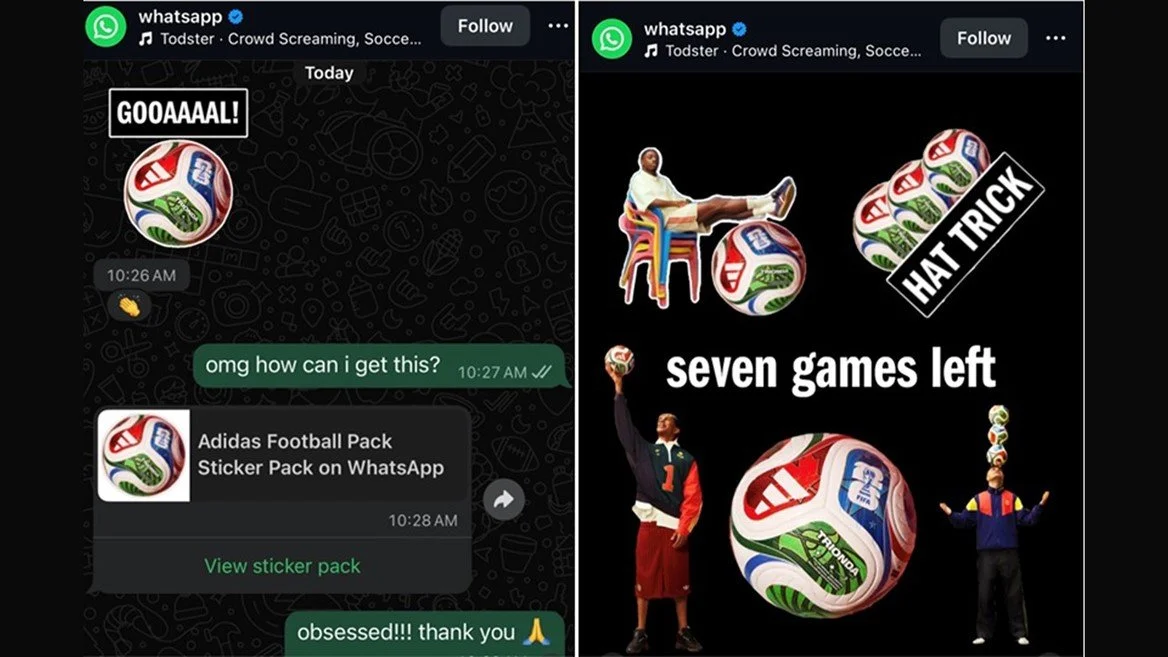
Why it worked: Turned the ultimate second-screen behavior, frantic group chatting during games, into the product experience itself. Instead of buying traditional ad slots telling people to talk about the tournament, WhatsApp partnered with Adidas to dynamically transform the platform’s standard football emoji into Trionda (the official World Cup match ball) across billions of active chats globally.
Cultural insight: Football fans do not watch historical match moments in isolation. They experience them as a shared, immediate digital collective. A fan’s immediate instinct after a massive goal isn’t to look at a stadium billboard, it is to pull out their phone and text the group chat.
Business lesson: The product didn’t just market the cultural moment, it hosted the cultural moment. By embedding the official tournament iconography directly into the natural flow of daily human communication, the brand achieved mass global scale without interrupting the fan experience.
3. Corona
Why it worked: Celebrated Mexican hospitality instead of just the sport. The “El Extra de México es Mundial” campaign focused on the deeply ingrained Mexican concept of el extra, which represents the pride in giving more than expected to guests.
Cultural insight: The World Cup wasn’t framed merely as a sporting event. It was framed as an entire nation opening its doors and welcoming the world.
Business lesson: The product became a physical symbol of cultural pride and hospitality, rather than a transient tournament promotion.
4. Starbucks
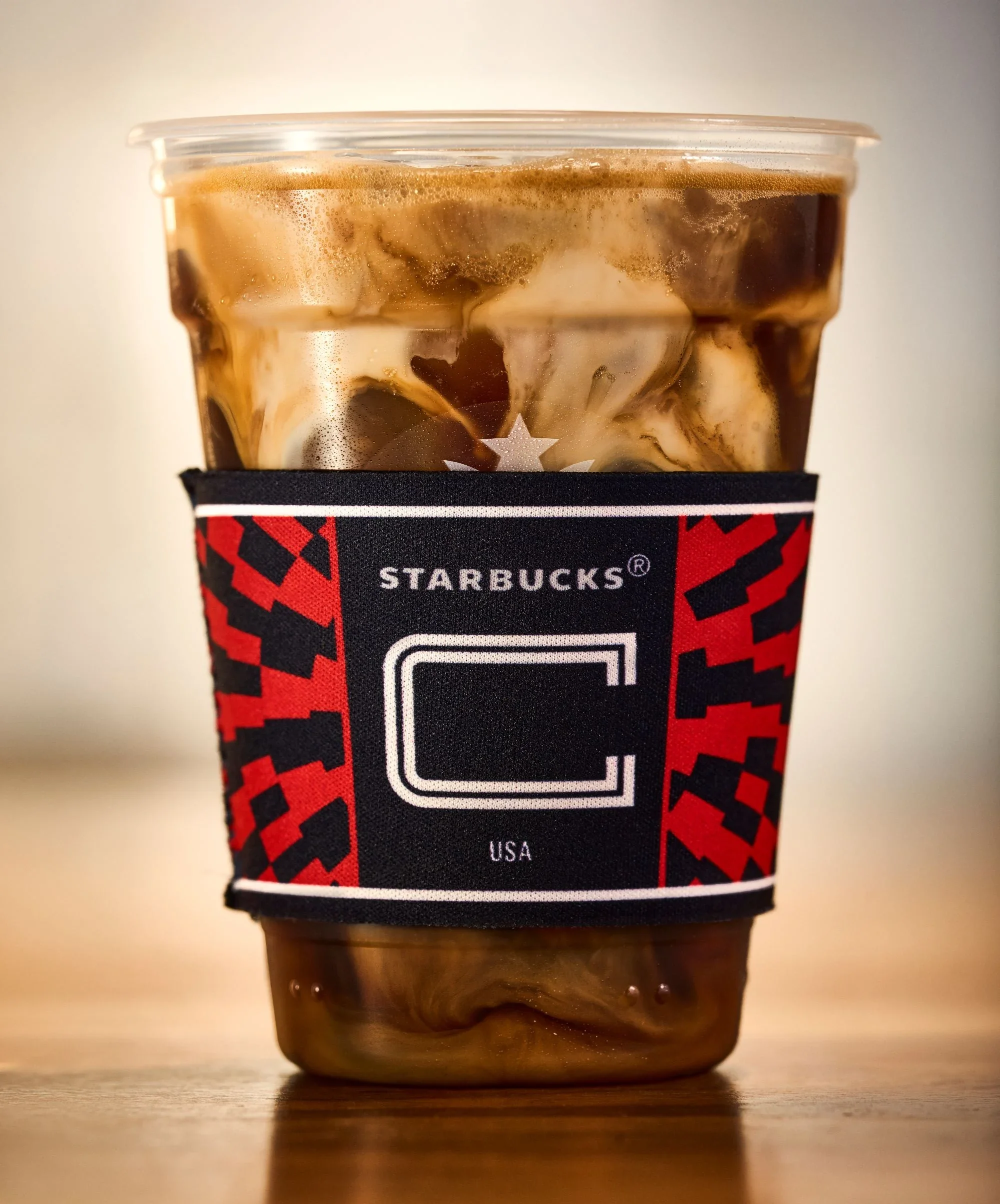
Why it worked: Used clever, agile wordplay to ambush the tournament without paying official FIFA partnership fees. Their simple :15 spot played off the double meaning of the “cup” in Starbucks coffee and connected it seamlessly to the World Cup. They then pulled this into the physical world with “Captain Cup Sleeves,” a Soccer Bearista Cup, collectible merch, and immersive pop-ups in NYC.
Cultural insight: You don’t need a multi-million dollar official FIFA license to belong in the conversation. Consumers already associate global sports moments with daily morning rituals and community gathering spaces.
Business lesson: A powerful case study in how to bring a cultural moment to life through sheer creativity and physical product extension when you lack the budget for a massive, traditional sponsorship.
5. Bank of America
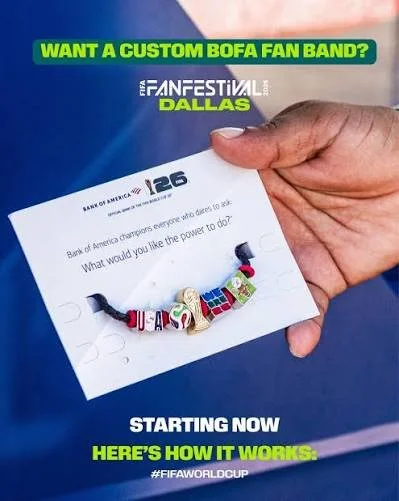
Why it worked: Turned standard corporate swag into a viral, gamified collectible by leveraging personalization and deliberate scarcity across all 11 U.S. host cities. By offering a base band customizable with 140 distinct charms—including hyper-local landmarks—Bank of America manufactured massive, sneaker-drop-style lines that forced an operational pivot to a strict reservation system and sparked a thriving $50+ online resale market.
Cultural insight: Modern fans don’t want to consume a brand’s narrative. They want the brand to help them document and display their own. True engagement comes from providing a community badge of honor, not just plastering a logo on a stadium wall.
Business lesson: A masterclass in shifting from passive corporate impressions to active consumer participation. It proves that by anchoring a massive, traditional sponsorship in utility and hyper-local scarcity, an enterprise brand can turn a standard marketing budget into a viral pop-culture phenomenon.
So, what’s the ultimate lesson heading into World Cup 2026?
Winning a multi-week global event isn’t about renting space in a fleeting cultural moment. It’s about buying a permanent stake in the identity of your audience.
